


A friend of mine messaged me Saturday with crying face emojis. Not grief. Joy. Hope. A renewed faith that for the first time in a long time, an authoritarian regime might actually fall.
Her family escaped Iran when she was a little girl. She and her family have lived most of their lives in a kind of quiet fear that most Americans can’t imagine. The kind where you don’t put your name on anything publicly. You don’t post on social media. You don’t draw attention to yourself. Not because you’ve done anything wrong. Because you still have family there. And in a country where the regime punished dissent with imprisonment, torture, and death, visibility was a risk you couldn’t afford.
She called me that night, clearly choked up, holding something she hadn’t allowed herself to hold in decades.
Hope. The possibility of seeing family, relatives, friends who have been out of touch for years. Everything covert. Hidden behind VPNs and coded communications. The idea that maybe, for the first time, she could visit the country she and her parents were forced to leave.
Before 1979, before Ayatollah Khomeini seized power and dismantled everything, Iran was one of the most progressive countries in the Middle East. On some measures of women's participation in government and public life, it rivaled or exceeded what the United States had achieved at the time.
Women gained the right to vote in 1963. By 1978, twenty-two women sat in the Iranian parliament. Three hundred thirty-three women served on elected local councils. A third of university students were women. Two million women were in the workforce. Iran had a female ambassador to Denmark. Women and men mixed freely in universities, in public life, in government. The Family Protection Law gave women the right to petition for divorce and retain custody of their children.
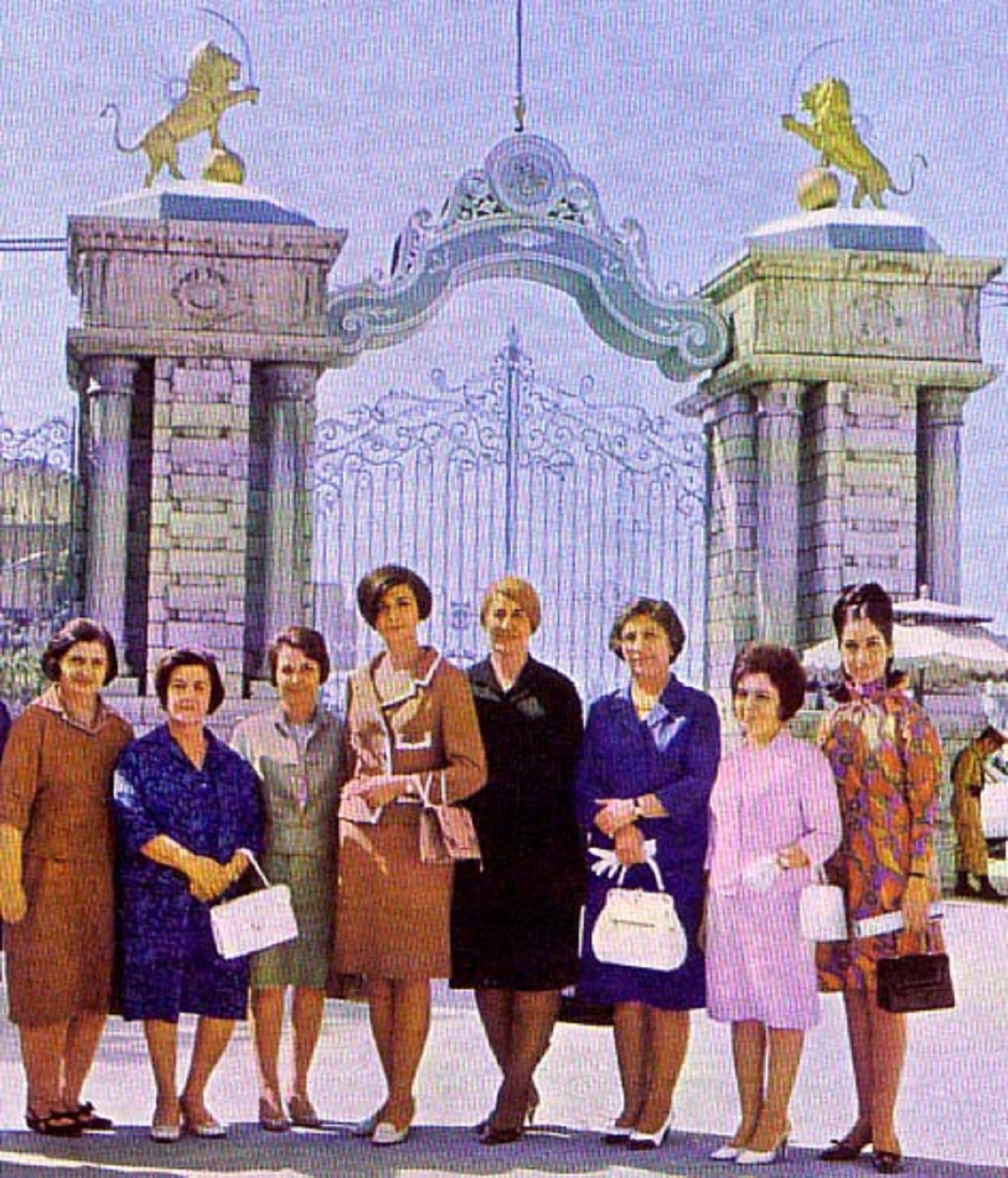
Then the revolution came. And all of it, every single bit of it, was taken.
Khomeini lowered the legal marriage age to nine. Professional women were fired and told to go home. The hijab became mandatory. A morality police force was created specifically to monitor women’s clothing, behavior, and movement. Even laughing too loudly in public could get you punished.
A country that had been building toward something extraordinary was dragged backward by decades overnight. The women who had been in parliament, in universities, in courtrooms were erased. Not because they failed. Because someone decided their freedom was a threat.
Patrick Bet-David was born in Tehran in 1978, one year before the revolution changed everything.
His family fled during the Iran-Iraq War. They spent time in a refugee camp in Germany before eventually making it to the United States. His father worked as a cashier at a ninety-nine cent store in Inglewood, California. His mother was on welfare.
He served in the 101st Airborne. Built a financial services company. Created Valuetainment, one of the largest entrepreneurship media platforms in the world. He’s been outspoken about what this moment means. Not just geopolitically, but personally. For him. For every Iranian-American who escaped and built a life in a country that let them.
When the news broke Saturday that Ayatollah Khamenei had been killed in a joint U.S.-Israeli operation, along with the defense minister, the commander of the Revolutionary Guard, and the secretary of Iran’s Security Council, Bet-David posted what millions of Iranian-Americans were feeling: Your days are numbered.
This isn’t abstract for people like Patrick. Or for my friend who called me choked up with emotion and tears streaming down her face. This is forty-seven years of waiting.
I’m not a foreign policy analyst. I’m not going to tell you what should happen next in the Middle East.
But I do know something about operations.
I spent years in presidential-level advance, communications, and operations. WH, DHS, HHS, large corporations, campaigns. I’ve been on the road with a Vice President. I’ve stood on an Air Force base where the security clearances alone told you everything you needed to know about what was happening below the surface. There was a tour that day. An elevator that went down into the ground, levels deep. The Base Commander, a Brigadier General, gifted me a signed photograph of one of the jets. I still have it in my stack of memorabilia.
I’m telling you that story because I want you to understand something: what happened this weekend was not impulsive. It was not reactive. A joint operation between two countries that simultaneously eliminated a supreme leader, a defense minister, an IRGC commander, and the secretary of a national security council. That is years of intelligence, coordination, and execution with zero margin for error.
That’s operational excellence at the highest level. And whether you agree with every policy decision or not, you can recognize precision when you see it.
The principles don’t change when the stakes scale up.
She’s a dear friend — a retired Air Force Colonel whose husband wears three stars. And she told me something once that I’ve never forgotten.
“The one thing the military does better than anyone is break you completely down so they can rebuild you.”
Not to destroy you. To strip away the assumptions, the ego, the habits that will get you or someone else killed when it matters. And then rebuild you with discipline, structure, and the ability to execute under pressure without hesitation.
That’s why what happened this weekend looked effortless from the outside. It wasn’t. It was decades of that kind of foundation-building. Thousands of people trained to see the field, read the patterns, build the plan, and execute when the window opens.
Here’s the part that applies to you, whether you’re building a company, scaling a team, or trying to figure out why your business still runs on adrenaline instead of systems.
The best business builders I’ve ever worked with did the same thing the military does. They didn’t just add tools and strategies on top of what already existed. They tore it down first. Through coaching. Through mentorship. Through apprenticeships and hard conversations with people who told them the truth instead of what they wanted to hear. They broke down the bad habits, the ego-driven decisions, the “we’ve always done it this way” thinking. And then they built something real on a foundation that could actually hold weight.
Most business owners skip that step. They want the systems, the scaling, the precision. But they’re trying to build operational excellence on top of a cracked foundation. And they wonder why it keeps falling apart.
So let me ask you: do you actually see the field? Do you know what’s happening in your business right now, or are you reacting to whatever’s loudest? And when the window opens, when the opportunity is right in front of you, are you ready? Or are you scrambling to figure out the basics while the moment passes?
The discipline of seeing clearly, building deliberately, and executing when it counts. That’s what separates the people who scale from the people who stall. The military does it at the highest level. The best businesses do it every single day.
The question is whether you’re doing it. Or whether you’re still running on a foundation that needs to come down before anything real can go up.
That’s what the Iranian people are facing right now. Forty-seven years of a broken foundation. And for the first time, the possibility of tearing it down and building something worthy of the country they were before someone took it from them.
