Sticker Shock
What nobody tells you about health insurance when you’re building a business.
There’s a moment every growing business owner hits.
You’ve got real revenue. Maybe a team. Things are starting to feel like a business — not just a hustle with a bank account. And then someone says the words: health insurance.
And you get the quote.
$1,500 a month. Per person.
That number hits like a lead balloon. Because nobody — not the business coach, not the accountant, not the podcast you’ve been listening to for three years — prepared you for what this actually costs. They talked about hiring. They talked about payroll. They talked about culture.
Nobody talked about this.
I’ve spent years working on the inside of healthcare policy — HHS, among other places — and I’ve watched this system from both sides of the aisle. I understand the argument that everyone deserves coverage. I also understand the argument that free market competition drives down cost and drives up quality. Both arguments have merit.
Here’s the truth neither side wants to say out loud: the system is broken. It was patched together with subsidies that were never designed to be permanent, and now those patches are coming off at exactly the wrong time for small business owners.
If you’re building a business right now, you need to understand what’s actually happening. Not the sales pitch. Not the sponsored content. The real math.
What Just Changed (And Why It Hits You Specifically)
For four years — 2021 through 2025 — the federal government ran enhanced ACA subsidies that kept marketplace insurance artificially affordable. A 55-year-old self-employed business owner earning $70,000 might have been paying $200 a month for decent coverage.
Those subsidies expired January 1, 2026.
That same person is now looking at $600, $800, maybe more, depending on their state, their age, and where their income lands relative to the federal poverty line. One dollar over the threshold and you fall off the subsidy cliff entirely. No gradual phase-out. Just gone.
Here’s the number that stopped me: nearly 40% of the people losing subsidy eligibility are self-employed. That’s five times the rate of the general population. This isn’t a problem hitting corporate America. It’s hitting you.
And if you’re in the 50-to-64 bracket — too experienced to be young, too young for Medicare — you’re in the hardest spot of all. Premiums are age-based. A 64-year-old can be charged three times what a 25-year-old pays for the same plan. No Medicare yet. No subsidy cushion. Just the full freight, due monthly.
A to Z Without a Bridge
There’s an argument that letting the subsidies expire puts money back in taxpayers’ pockets. I understand the logic. And honestly, I think I understand what’s being attempted: break down a system that doesn’t work so something better can be built in its place. I’m not against that goal.
But you can’t jump from A to Z without a transition plan.
Right now we’re somewhere around D. And the people standing in that gap are small business owners, self-employed workers, and anyone in the 50-to-64 bracket who just watched their premium more than double overnight. According to KFF, average premiums rose 114% when the subsidies expired. That’s not a tax cut. That’s a cost shift. And the people absorbing it didn’t get a vote on the timing.
The bridge matters. The people in the gap matter. That’s not a political statement. It’s just math.
Let’s Talk About Who Isn’t Feeling This
Members of Congress technically buy their health insurance through an ACA exchange. Sounds fair, right? Same boat as the rest of us.
Except it isn’t.
The federal government pays roughly three-quarters of their premium through a stable employer contribution — funded by the taxes you and I pay — that has nothing to do with the ACA subsidies that just expired. When those subsidies went away on January 1, it wasn't members of Congress who saw their premiums double. It was self-employed workers, small business owners, and families who had nowhere else to go.
The people who voted on whether to extend those subsidies — or not — don’t personally feel what happens when they don’t.
Let me write that again.
The people who voted on whether to extend those subsidies — or not — are NOT part of the same system. They do not personally feel what happens when they fail to act.
This isn’t a partisan point. It’s an accountability point. Any elected official who votes on healthcare policy should be subject to the same market they’re legislating. They shouldn’t be able to vote their own pay raises. They shouldn’t receive lifetime benefits after two terms while the rest of us build our own retirement from scratch. And they shouldn’t have access to investment structures that everyday Americans can’t touch.
The separation between what they experience and what we experience is exactly why nothing changes.
And while we’re here — let’s talk about the pre-existing conditions argument, because it gets used to justify the entire ACA framework. People credit Obamacare with ending the pre-existing condition rider. What most don’t realize: that was always just a vote. One vote. It could have happened — and should have happened many years earlier — without overhauling the entire system. Some states had already eliminated pre-existing condition exclusions before the ACA existed. It was a solvable problem that got used to justify an unsolvable one.
I know this personally.
Before the ACA, I had a plan I liked, with no pre-existing exclusions. It was affordable, it was mine, and while it ticked up a little each year with age, it stayed under $300 a month. It didn’t cover pregnancy — because I didn’t need pregnancy coverage. When the ACA went into effect, my plan had to go away. The reason? It didn’t include maternity coverage.
Today my health plan runs around $2,500 a month. Higher deductibles. Higher copays. More “not covered” responses than I can count.
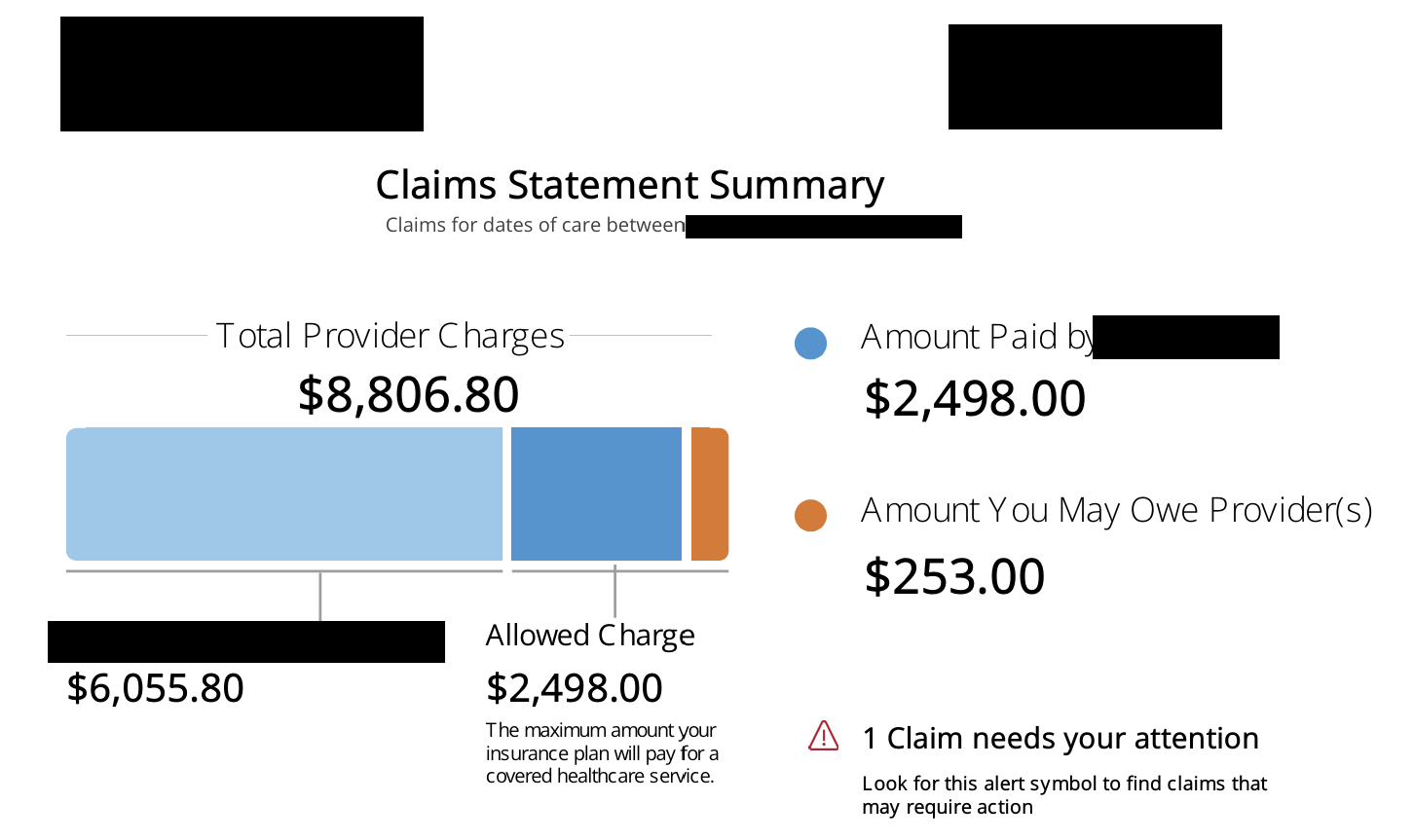
I found that out firsthand during a double lumpectomy. Four surgeons. We opted to do the reconstruction at the same time — no implants, just a reasonable request to make things look somewhat uniform. Everything was preapproved. Or so I thought. Afterward, during recovery, I received notice the reconstruction part of the surgery was denied. I was furious.
I raised hell. Let me get this straight — the insurer had originally authorized a double mastectomy. When my surgeon made the call in the operating room and didn’t need to take it all, suddenly they wanted to dictate what they would and wouldn’t cover on the back end? I was supposed to just walk around like that was fine? That a reasonable outcome after ‘breast-conserving surgery’ wasn’t a covered medical necessity?
I later asked a physician friend about prostate surgery. He told me that in most cases, a penile implant option is automatically offered and covered as part of the procedure.
I’ll let you sit with that inconsistency for a moment.
There’s more — birth control, IUDs, the little blue pill, pain management. But that’s another article.
The system doesn’t fail by accident. It fails by design — because the people designing it aren’t living inside it.
I’m not saying any of this to be angry. I’m saying it so you understand why waiting for Washington to fix this isn’t a strategy. Your ability to learn to work and build a business in spite of Washington is what you must master. And then fight like hell to vote in people who will actually change the broken systems and hold them accountable. They work for you.
The greatest power isn’t at the presidential level. It’s at the state level, and in who goes to Washington. The problem is that too many of them get swallowed into the system and start to justify their broken promises. They promised two terms. Here they still are. Now they’re part of the machine they once ran against.
Build anyway. Vote accordingly.
The People Profiting While You’re Panicking
Here’s what the numbers actually look like.
In 2024, the CEOs of the six major national health plans earned a collective $159.4 million in total compensation. That’s not revenue. That’s not company performance. That’s what landed in their pockets while you were getting a denial letter during recovery from surgery.
The breakdown:
UnitedHealth Group CEO Andrew Witty: $26.3 million
Cigna CEO David Cordani: $23.2 million — 279 times the median Cigna employee salary
Molina Healthcare CEO Joseph Zubretsky: $21.9 million — 268 times median employee pay
Elevance Health CEO Gail Boudreaux: $20.5 million — 370 times the median Elevance employee salary of $55,372
CVS Health CEO David Joyner: $18.2 million — 299 times median employee pay
And while those numbers were being locked in, the same companies were pouring money into stock buybacks and dividends. Cigna alone planned over $10 billion in returns to top investors. Elevance committed $3.3 billion to shareholder payouts.
This is the system. $159 million in CEO compensation in a single year, stock buybacks in the billions, and a denial letter waiting for you when you came out of surgery. That's not a broken system. That's a business model.
The Dirty Secret About “All Your Options”
When you start shopping, you’ll feel like there are a lot of choices. There aren’t.
Each state regulates its own insurance market. In practice, that means a handful of carriers — sometimes fewer than ten — are operating in your state’s small group market. And major players have been quietly exiting. Humana stopped offering group plans entirely. Cigna and Oscar ended their co-branded group offering. In some states, multiple carriers have left the small group market in the same period.
What looks like a menu of twenty plans is usually three or four carriers building different cost structures on the same foundation. Higher ER costs here, lower specialist copays there, different deductible configurations. It’s not real competition. It’s one rack of clothes in different colors.
Here’s a comparison that makes this land: when auto insurance was deregulated and carriers were allowed to compete across state lines, the market opened up. More plans. More competition. Actual pricing pressure. Health insurance doesn’t work that way. It’s state-by-state, carrier-by-carrier, and the concentration of players in most markets is striking — and not in a good way.
Cross-state competition isn’t a radical idea. It’s just one that doesn’t serve the existing power structure. Until that changes, you’re working with a limited menu and you need to know it.
And while we’re talking about what doesn’t work: the one-size-fits-all mandate has to go. A 28-year-old healthy single founder does not need the same plan as a 47-year-old with two kids and a chronic condition. Forcing everyone into the same structure doesn’t create equity. It creates resentment, workarounds, and people going uninsured because the only option available doesn’t fit their life. Let people choose what they actually need coverage for. That’s not a political position. That’s common sense.
The If/Then Map
Here’s how I’d think about it. No sales pitch, just decision logic.
If you’re pre-revenue or early-stage (under $75K in the business): Health insurance isn’t the first fire to put out. What you can do: check the ACA marketplace for individual coverage, understand your subsidy eligibility based on actual projected income, and look at short-term plans as a bridge — with eyes open about what they don’t cover. Do not make payroll decisions based on coverage you can’t sustain.
If you’re growing and have W-2 employees: This is where the math gets serious. You’re not legally required to offer coverage until you hit 50 full-time employees, but the talent conversation starts well before that. A few structures worth understanding before you commit to a traditional group plan:
PEOs (Professional Employer Organizations): Companies like Justworks or TriNet pool employees from multiple small businesses to access larger-group rates. The catch: you give up some HR control, the pricing can be less transparent than it looks, and exiting is rarely as clean as entering. Know exactly what you’re agreeing to before you sign.
ICHRA (Individual Coverage HRA): You set a monthly contribution amount. Employees choose their own individual plan on the exchange and get reimbursed. More flexibility, simpler administration, fully compliant. Worth understanding.
Payroll platforms with benefits layers: Gusto, ADP, and others have built-in benefits marketplaces. The convenience is real. The depth of options varies significantly. Know what you’re actually getting — not what the demo makes it look like.
If you can afford to offer coverage: Do it. Not because it’s legally required — it isn’t, under 50 employees. Do it because the talent market is brutal and the people you want to hire have options. A meaningful employer contribution toward health insurance does more for retention than a ping-pong table ever will.
One of the things I wish I had done earlier in scaling my pet services company was offer a vehicle benefit and health insurance sooner. I held back because of the fear other business owners handed me — the risks, the costs, the potential liabilities. Be informed. But if you’ve done the math and you can withstand 24 months at those rates if everything went sideways, jump off the cliff. Benefits reduce turnover. They build loyalty. They signal that you’re building something real.
Questions to Ask Before You Sign Anything
The broker is not always your friend. The platform is not always transparent. Here are the questions that will tell you what you’re actually working with:
On the plan itself:
What is the total monthly cost — employer portion and employee portion — for each coverage tier (individual, individual + spouse, family)?
What is the deductible, and when does it reset?
What’s the out-of-pocket maximum, and does it apply per person or per family?
Which hospitals and specialists are in-network in the areas where my employees actually live?
Is my primary care doctor in this network? If there’s an emergency and I need a specialist, am I required to stay in-network?
On the business math:
If I contribute X per employee per month, what does that cost me annually at current headcount — and what does it look like if I add three people?
Is the employer contribution tax-deductible, and what’s my actual net cost after that?
Am I required to offer coverage to part-time employees, and at what hour threshold?
What’s the minimum employee participation rate required to qualify for this group plan?
On the structure:
Am I locked into this for 12 months, or is there flexibility if the business changes significantly?
What happens to employees’ coverage if I have to reduce headcount?
If I go with a PEO, what exactly am I giving up in terms of control — and what does it cost to exit? What fees are associated with leaving?
Is there a better structure for my specific employee demographics: age range, health needs, geography?
The bottom line question: Can I sustain this cost for 24 months if revenue is flat? If the answer is no — don’t commit to it yet. A benefit you have to pull back is worse for morale than one you never offered.
The Reframe
The sticker shock is real. And the instinct is to put it off — we’ll figure it out when we’re bigger.
Here’s the problem with that: the longer you wait, the harder it gets. The talent you want to attract is making decisions right now about where to work. And if you’re in the 50-to-64 bracket yourself, your personal health insurance situation is directly tied to how you structure your business income.
The system isn’t going to get simpler. The subsidies may or may not come back — that’s a political question, not a certainty. What you can control is how clearly you understand your options at every stage of growth, so you’re not making a panicked decision in the middle of a hiring push.
Know the math before you need it.
The noise on this topic is loud. Sponsored comparison sites. Broker-referred content. Benefits platforms that overpromise and underdeliver.
None of it tells you what I just did.
That’s why I write this.
The people who actually control your state's insurance market are findable. Reachable. And more accountable than you think. More on that soon.
If this resonated, subscribe to The Jenn Files. I write about business, money, resilience, and grit — cutting through the noise so you can build something that can’t be broken.
Sources
Fierce Healthcare — 2024 CEO compensation analysis of the six major national health plans ($159.4M collective total)
S&P Global Market Intelligence — David Cordani / Cigna CEO compensation and pay ratio, 2024
Becker’s Payer Issues — CEO-to-worker pay ratios across major payers, 2024 proxy filings
Insurasales / SEC proxy filings — Andrew Witty / UnitedHealth Group compensation, 2024
Jacobin / public filings — Cigna and Elevance Health stock buyback and dividend figures
KFF (Kaiser Family Foundation) — ACA subsidy expiration impact; 114% average premium increase; self-employed share of subsidy-eligible population
CNBC — Subsidy cliff analysis; premium increases for 50-to-64 age bracket, 2026
healthinsurance.org — Subsidy cliff mechanics and 2026 marketplace rules
No Labels — Congressional health insurance structure and employer contribution analysis
Washington State Office of the Insurance Commissioner — State-level carrier approval data, small group market, 2025
Stretch Dollar / Fierce Healthcare — Major carrier exits from small group market (Humana, Cigna/Oscar), 2024-2025


I lived this analysis- I learned some valuable lessons as I supported and was employed by a UK startup that had to provide health insurance for their US employees and I was charged to make recommendations on what was to be provided. Because the UK’s healthcare system is a government funded system (which isn’t perfect and has its own issues) we (US) team were able to secure a good program because our UK leadership believed in paying their employees a living wage and that included healthcare.